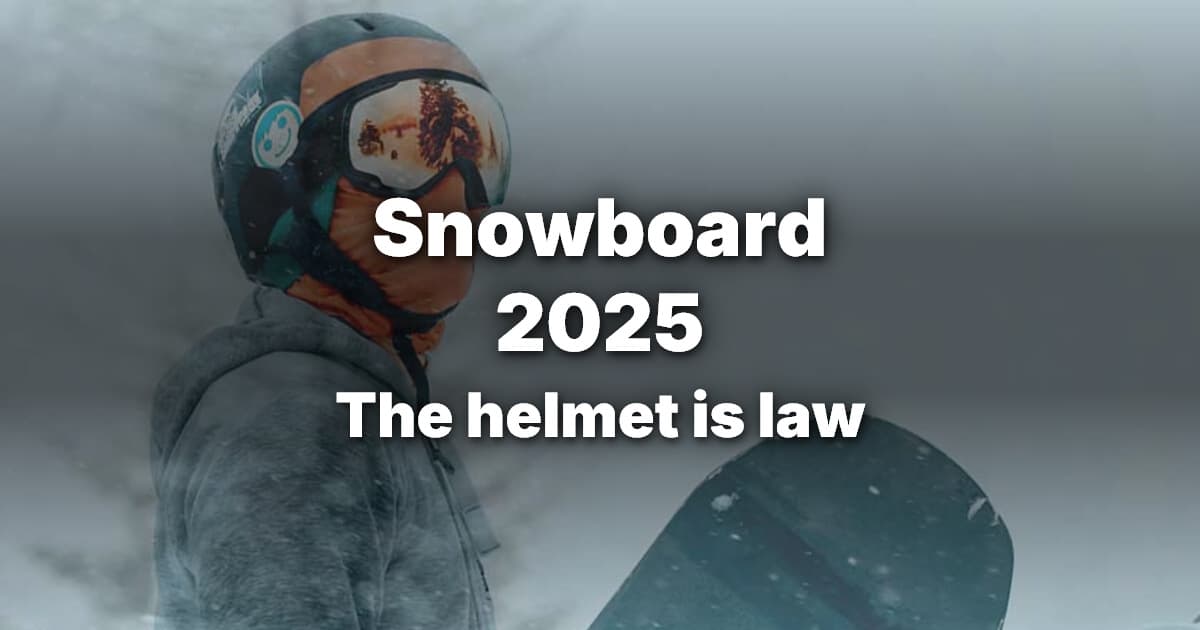
Last season you saw everything: helmet on the backpack, helmet on the knee, helmet dangling from a wrist.
On the head? Almost never.
Why? Because helmets used to be mandatory only in certain contexts (and, nationally, only for minors).
On regular slopes, plenty of people pretended it didn’t exist.
That movie is over now:
from the 2025/2026 winter season, helmets are mandatory for everyone on Italian pistes — ski and snowboard.
Not an opinion. It’s the law.
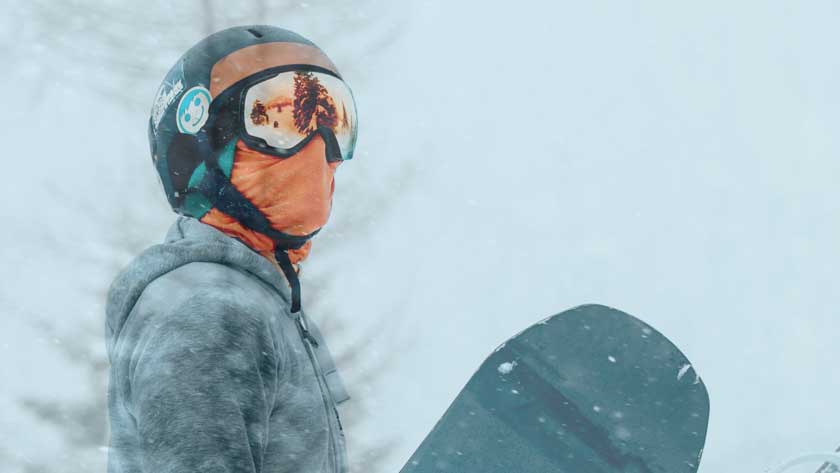
In the photo: Davide Morzenti, Moena. Pic by Rommel.
Mandatory ski and snowboard helmets: what the law says in 2025
The legal framework is Italy’s slope-safety decree, D.Lgs. 40/2021, which originally required helmets only for minors. On 10 August 2025 Law no. 119 of 8 August 2025, which converted Decree-Law 96/2025 (the “Sport Decree”), removed the age limit: helmets are now mandatory for everyone, at any age, for alpine skiing, snowboarding, telemark, sledding and tobogganing.
Here’s the official reference:
https://www.normattiva.it/uri-res/N2Ls?urn:nir:stato:decreto.legislativo:2021;40~art17=
The key point for riders is simple: helmet use is no longer “optional” or “only for kids.”
In practice, this means resorts can (and do) enforce it with:
- helmet checks at lifts
- denied access without a helmet
- immediate removal for repeated violations
Why the crackdown?
Because safety doesn’t stop at the snowpark.
Just like what happened years ago with mopeds: once it becomes normal, injuries drop and excuses disappear.
⚠️ What it means in real life
- Without a helmet, you may be stopped at the lift
- You can be told to leave the slopes
- In case of an accident, going without protection can seriously complicate liability
- Some policies may require certified protective gear — check your insurance terms
💡 The helmet is no longer a “personal choice.” It’s an operational requirement.
Why helmets are not a “pain” anymore
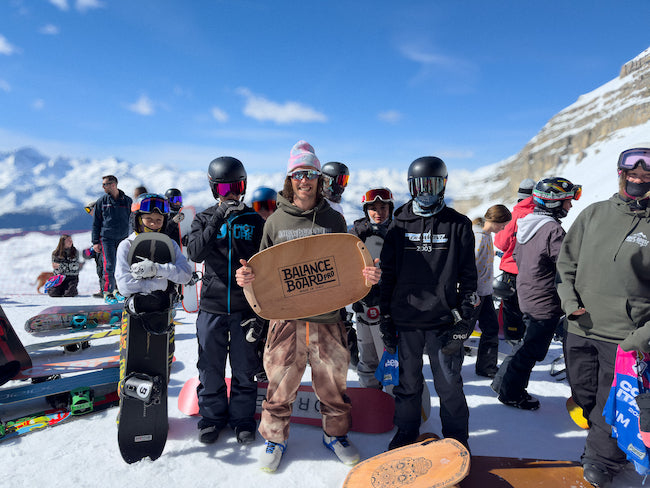
In the photo: Snowboarders have been using helmets forever — long before the 2025/26 rule. E. Lauzi with his team at Coppa Italia.
Forget helmets from 10 years ago: heavy, bulky, annoying.
2025/26 helmets are a different world.
Typical modern features:
- Super-light In-Mold construction
- MIPS (Multi-Directional Impact Protection System)
helps reduce rotational forces (the nastier impacts) → https://mipssafety.com/ - Active vents you can open/close
- Front airflow channels to reduce goggle fog
- Removable ear pads
- Minimal, modern designs
- Micro-adjust fit systems (BOA-style dial)
a rear dial that fine-tunes fit and keeps the helmet stable with even pressure
💡 In short: helmets today are lighter, better looking, and dramatically safer. Yes—there are stylish ones too.
🏋️♂️ Active Prevention: The helmet protects you — but balance prevents the fall
Here’s the part people avoid saying out loud:
many slope crashes don’t happen because of the gear… they happen because of lack of control.
Chopped snow, ice plates, unpredictable riders cutting your line—if your body can’t react fast, the helmet becomes your only safety net.
That’s why real safety starts before you get on the chairlift.
The helmet reduces damage when you fall.
Balance training reduces how often you fall.
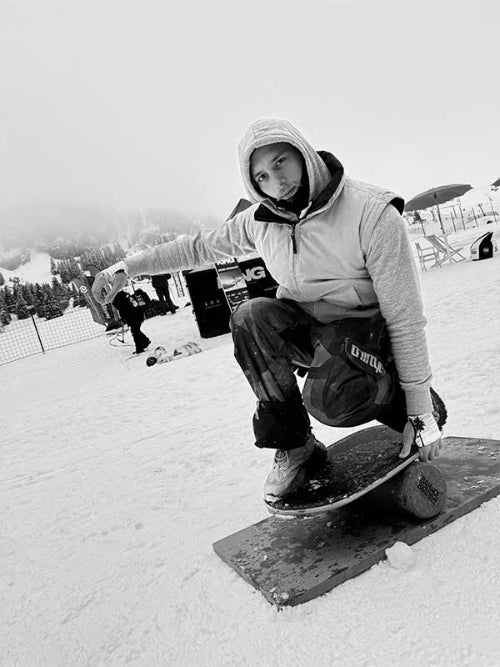
In the photo: Davide Morzenti training before a powder session.
This is where the balance board comes in: a simple, brutal tool for proprioception that snowboarders, freeriders and board-sport athletes use to train:
- micro-corrections
- center-of-mass control
- ankle stability
- core reactivity
- dynamic coordination
These are the exact mechanisms you need to manage speed, vibration and surprises on snow.
Fun fact: elite athletes use it too.
On our blog we covered how Jannik Sinner used a balance board during a key phase of his athletic recovery:
Balance Board and Tennis: Jannik Sinner’s Secret
Training 10–15 minutes a day on a balance board means showing up with a body that’s already “awake.”
In 2025/26, real safety is (1) passive protection (helmet) + (2) active preparation (balance).
💡 Hand-finished balance boards by Balance Board Pro
Built by a shaper with fiberglass + resin finishing
👉 Explore the collection
🧢 Helmet Styles: Skate, Freestyle, All-Mountain, Freeride
Skate & Freestyle
Perfect if you live in the park or want an urban look.
Typical features:
- minimal shape
- removable ear pads
- adjustable fit
- compact profile
- optional MIPS
Best for jibbing, rails and freestyle.
In-Mold All-Mountain / Freeride
The most evolved category for performance, comfort and protection.
Typical features:
- ultra-light In-Mold shell
- integrated MIPS
- open/close vents
- ventilation channels to reduce goggle fog
- precise micro-adjust fit
- clean, aerodynamic design
Best for fast pistes, carving and freeride.
How to choose the right helmet
- Park → Skate/Freestyle
- Pistes → In-Mold + ventilation
- Freeride → In-Mold + MIPS + active ventilation
- Big goggles → look for front anti-fog airflow channels
The real question isn’t “which one looks cooler?”
The question is: what kind of riding do you actually do?
Key helmet brands (and why riders pick them)
No ads here—just how the market is split. Differences aren’t only aesthetics: materials, tech and intended use change a lot.
Anon
https://www.burton.com/it/it/c/protective-gear
- clean, minimal look
- removable ear pads for a skate-style fit
- stable adjustment systems
- praised for comfort and low weight
Smith
https://www.smithoptics.com/en_IT/snow-helmets/
- very strong ventilation focus
- MIPS options
- great goggle compatibility and anti-fog setups
- light In-Mold models for all-mountain use
Giro
https://www.giro.com/c/snow-helmets/
- low profile for freestyle + all-mountain
- MIPS versions available
- simple fit, clean lines, low weight
- reliable safety without gimmicks
Bern
https://bernhelmets.com/collections/snow
- skate icon, loved by freestyle snowboarders
- removable ear pads + recognizable urban style
- MIPS options
- “casual” feel without giving up protection
These brands cover everything: park, piste, freeride and casual riding.
Common denominators: lighter weight, better comfort, precise fit, and—when present—systems like MIPS that reduce real risk.
Where to find good helmet deals (Italy)
These are the shops where we found good prices on snowboard helmets. Each link opens the shop’s helmet page, so you always see today’s prices and stock.
- Decathlon: good-value In-Mold helmets for piste and all-mountain riding
- DF Sport Specialist: technical helmets, MIPS models included
- FreshFarm: freestyle, park and all-mountain models
- KahunaShop: premium brands and flash discounts
What EN 1077 certification actually means
If you want a helmet that’s “slope-ready” in Europe, you’re looking for EN 1077 certification.
Inside the helmet you should see a label with EN 1077 plus Class A or Class B, along with the manufacturer and size.
Modern certified helmets go through tough tests: impact absorption, retention/strap strength, penetration resistance, and performance in cold conditions.
Most snowboarders prefer Class B for comfort and ventilation—while Class A usually offers more coverage.
Bottom line: if the EN 1077 label is missing, don’t pretend it’s fine. It isn’t.
👇 Let’s kill the fairy tale: “I don’t want a helmet”
Nobody cares.
This season you wear it. Period.
- It’s mandatory
- It’s safer
- It’s lighter
- It improves stability, visibility, and control
💡 Wearing it doesn’t make you less “cool.” It makes you less reckless.
❓ Helmet FAQ (Italy 2025/26)
Is the helmet mandatory everywhere?
Yes. Since 10 August 2025 an Italian national law requires it for everyone, at any age, for alpine skiing, snowboarding, telemark, sledding and tobogganing.
What certification do I need?
EN 1077 (ski/snowboard helmets).
Does MIPS really matter?
It’s designed to reduce rotational forces in angled impacts (the ugly ones). Learn more:
https://mipssafety.com/
ABS or In-Mold?
- ABS → tougher for multiple hits, but heavier
- In-Mold → lighter and more comfortable for all-day riding
Can you get stopped at the lifts?
Yes. Without a helmet you risk a fine of €100 to €150, and if you’re caught again, your lift pass can be withdrawn or suspended for one to three days (art. 17, D.Lgs. 40/2021).
Conclusion
The helmet isn’t an accessory anymore. It’s part of your technical setup.
It’s mandatory. And it’s the smartest thing you can wear when you ride.
Park rider, freerider, beginner, Sunday “hard guy”:
you wear the helmet. Period.
Borrowing a classic moto quote (perfect here too):
“Strap the helmet. Stay sharp. Ride smart.”